“Big powder” search results (2000)

Four key points in the production of Italian espresso
Macinazione: the right ground coffee beans are too thick or too fine to make a thick and delicious espresso. Coffee powder is too thick, the gap of coffee powder in the filter is too big, the resistance to water is not enough, the flow rate of coffee is too fast, it is easy to cause insufficient extraction, coffee is tasteless. It is also wrong for coffee powder to be ground too fine, because the resistance is too high, and the hot water stays in the filter for too long.
2014-07-11 Main points of making espresso espresso and espresso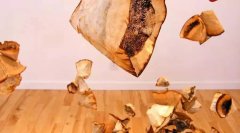
Matsuya method comes from Japanese hand flushing method
The Matsuya method also comes from Japan, which was invented to extract only the delicious ingredients from the coffee. Use a spoon to dig a big hole in the coffee powder, about 30cm from the noodle, pour water from the middle until the coffee liquid begins to drip, then draw a circle like a circle to wet the coffee powder and cover it with steaming. After 3 minutes, it begins to be uniform.
2016-06-14 Matsuya from Japan hand Chong method way also source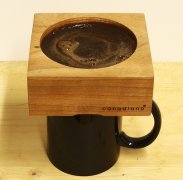
Matsuya method hand brewing method single coffee utensils boutique coffee Japanese style hand brewing
The Matsuya method also comes from Japan, which was invented to extract only the delicious ingredients from the coffee. Use a spoon to dig a big hole in the coffee powder, about 30cm from the noodle, pour water from the middle until the coffee liquid begins to drip, then draw a circle like a circle to wet the coffee powder and cover it with steaming. After 3 minutes, it begins to be uniform.
2016-07-09 Matsuya dharma method item coffee utensils boutique Japanese style hand flush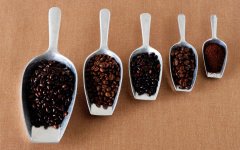
Nova Oscar coffee machine home coffee machine recommended Italian coffee bean cafe
Large boiler machine came professional handle 58 mm powder bowl vibration pump mother boiler: mother boiler 1.9L, sub-boiler 0.75L (so that the machine of the small boiler is unbearable ah) Italian origin, very heavy, 34 jin. NUOVA SIMONELLI is an established coffee maker. The entry machine recommended by many old birds is about 5000 yuan. When I first learned about this, I sighed and cheated my father.
2016-07-06 Nova Oscar coffee maker home recommendation Italian matching coffee beans coffee shop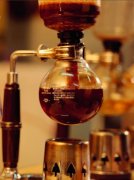
How to make coffee in a siphon pot? How does a siphon pot make coffee? Teach you to make with a siphon pot.
First, fill the water-hook the filter element and fill the pot with hot water until marked with the "two cups" icon. Put the filter element into the pot, hold the end of the chain with your hand, and gently hook it to the end of the glass tube. Be careful not to release the hook suddenly, so as not to damage the glass tube of the pot. Second, ignite-insert the pot diagonally-wait for a big bubble to light the alcohol lamp, insert the upper pot diagonally, and let the rubber edge against the next pot.
2016-03-15 What's the use siphon pot coffee how make teach you use
Matsuya method also comes from Japanese hand flushing method.
The Matsuya method also comes from Japan, which was invented to extract only the delicious ingredients from the coffee. Use a spoon to dig a big hole in the coffee powder, about 30cm from the noodle, pour water from the middle until the coffee liquid begins to drip, then draw a circle like a circle to wet the coffee powder and cover it with steaming. After 3 minutes, it begins to be uniform.
2016-06-07 Matsuya also comes from Japan Hechong method too.
Huijia 210 Italian coffee maker recommends Italian style espresso with beans and espresso
Vibrating pump professional handle 58 mm powder bowl using "pump and" this machine is also controversial in the coffee forum, mainly because it uses a heating block, opponents believe that the temperature of the heating block is not stable, supporters believe that it uses a large double heating block, enough to support the household. Personally, I played with my friends for a while, although I felt a little different from the machine of the big boiler.
2016-07-06 Huijia 210 Italian coffee maker recommended flavor matching concentration
Four important factors in the production of Italian espresso: 4m theory
Macinazione: the right ground coffee beans are too thick or too fine to make a thick and delicious espresso. Coffee powder is too thick, the gap of coffee powder in the filter is too big, the resistance to water is not enough, the flow rate of coffee is too fast, it is easy to cause insufficient extraction, coffee is tasteless. It is also wrong for coffee powder to be ground too fine, because the resistance is too high, and the hot water stays in the filter for too long.
2015-09-16 Italy concentrated Coffee production 4 important Factor Theory Macin
Four principles to be followed in making an Italian Espresso
(1) the quantity of coffee beans must be standard, generally 14-16 grams per cup, using good quality deep-roasted coffee beans. (2) the grinding powder should be of appropriate particle size, not too coarse or too fine. Coffee beans are too coarse or too fine to make thick and delicious espresso. When the coffee powder is too coarse, the gap in the filter bowl is too big, the resistance to water is not enough, and the coffee flow rate is too fast, which is easy to cause extraction.
2014-09-12 Coffee knowledge Espresso Coffee Encyclopedia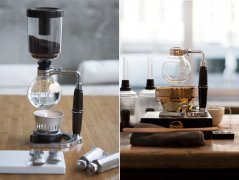
The history and usage of siphon pot
In 1840, a glass test tube in a laboratory triggered the invention of siphon coffee (Syphon). The British took the test tube used in Biya's chemical experiment as a model to create the first vacuum coffee pot. Two years later, Mrs. Bachang of France improved the kettle with a little spring in shape, and the familiar upper and lower convection siphon pot was born. Siphon coffee maker in France
2015-08-28 Siphon history and its usage 1840 one laboratory glass test
Preservation of coffee beans with basic knowledge of fine coffee
With the increasing consumption of coffee in China in recent years, China has gradually accepted the western food culture and style. Coffee as one of the three major drinks in the world has its unique charm. With the understanding and deepening of coffee culture, there are more and more forms of existence. Like instant, bottled drinks, raw coffee beans, roasted coffee beans. Of course, for the sake of convenience, there is now coffee powder.
2015-04-22 Boutique coffee basics common sense coffee beans preservation in recent years China consumer
History and usage of siphon pot
The history and usage of siphon coffee (plug-in brewing method) in 1840, a glass test tube in the laboratory triggered the invention of the siphon coffee maker (Syphon). The British took Biya's test tube for chemical experiments as the model to create the first vacuum coffee pot. Two years later, Mrs. Bachang of France improved this pot with a bit of spring shape, which is familiar to everyone.
2014-07-29 Siphon pot siphon pot usage coffee utensils
The history and usage of siphon pot
In 1840, a glass test tube in a laboratory triggered the invention of the siphon coffee maker (Syphon). The British took the test tube used in Biya's chemical experiment as a model to create the first vacuum coffee pot. Two years later, Mrs. Bachang of France improved the kettle with a little spring in shape, and the familiar upper and lower convection siphon pot was born. Siphon coffee pot in France
2015-10-23 Siphon History usage plug Cooking 1840 one Laboratory Glass
History and usage of siphon pot
The history and usage of siphon coffee (plug-in brewing method) in 1840, a glass test tube in the laboratory triggered the invention of the siphon coffee maker (Syphon). The British took Biya's test tube for chemical experiments as the model to create the first vacuum coffee pot. Two years later, Mrs. Bachang of France improved this pot with a bit of spring shape, which is familiar to everyone.
2015-10-08 Siphon history usage siphon coffee plug cooking
Matsuya method, a hand-flushing method derived from Japan
The Matsuya method also comes from Japan, which was invented to extract only the delicious ingredients from the coffee. Use a spoon to dig a big hole in the coffee powder, about 30cm from the noodle, pour water from the middle until the coffee liquid begins to drip, then draw a circle like a circle to wet the coffee powder and cover it with steaming. After 3 minutes, it begins to be uniform.
2016-06-01 From Japan Hechong method Matsuya also from Japan
Siphon pot basic siphon pot history and use method
In 1840, a glass test tube in the laboratory triggered the invention of the siphon coffee pot (Syphon), and the British took Biya as a prototype for chemical experiments to create the first vacuum coffee pot. Two years later, Mrs. Baxiang of France improved the pot with a little spring shape, and the familiar upper and lower convection siphon pot was born. Siphon coffee pot in France
2014-09-09 Coffee knowledge siphon pot history siphon pot usage
History and usage of siphon pot siphon coffee
In 1840, a glass test tube in a laboratory triggered the invention of the siphon coffee maker (Syphon). The British took the test tube used in Biya's chemical experiment as a model to create the first vacuum coffee pot. Two years later, Mrs. Bachang of France improved the kettle with a little spring in shape, and the familiar upper and lower convection siphon pot was born. Siphon coffee pot in France
2015-07-16 Siphon History usage Coffee 1840 one Lab Glass try
The history and usage of fine coffee siphon pot
In 1840, a glass test tube in a laboratory triggered the invention of siphon coffee (Syphon). The British took the test tube used in Biya's chemical experiment as a model to create the first vacuum coffee pot. Two years later, Mrs. Bachang of France improved the kettle with a little spring in shape, and the familiar upper and lower convection siphon pot was born. Siphon coffee maker in France
2014-10-20 Coffee knowledge boutique coffee science siphon pot coffee brewing
The History and usage of Coffee knowledge siphon Pot
In 1840, a glass test tube in a laboratory triggered the invention of siphon coffee (Syphon). The British took the test tube used in Biya's chemical experiment as a model to create the first vacuum coffee pot. Two years later, Mrs. Bachang of France improved the kettle with a little spring in shape, and the familiar upper and lower convection siphon pot was born. Siphon coffee maker in France
2014-09-24 Coffee knowledge history of siphon pot usage of siphon pot
How to master the ratio of powder to water for lightly roasted coffee
The shallow baking mentioned here refers to the extremely shallow baking in which there is no sound and at the beginning of an explosion, it is also stir-fried in a big fire, the pot is controlled in less than 10 minutes and the weight loss is 13% or less.
2014-07-02 Coffee knowledge coffee roasting coffee encyclopedia coffee technology